 Ian Soto
The world’s infrastructure, from bridges and buildings to pipelines and tunnels, is aging. Many structures built decades ago are now facing deterioration due to environmental factors, increased loads, and natural wear and tear.
This presents a significant challenge for engineers and city planners who must find effective ways to repair and strengthen these critical assets.
Traditional methods, such as steel plating or concrete jacketing, often come with limitations like added weight and lengthy installation times. A modern solution gaining significant traction in the construction industry is the use of carbon fiber reinforced polymer (CFRP).
This advanced composite material offers a powerful combination of strength, durability, and light weight, making it an ideal choice for a wide range of reinforcement projects.
This article explores the applications and advantages of using carbon fiber to strengthen and extend the life of our vital infrastructure.
What is Carbon Fiber Reinforced Polymer (CFRP)?
Carbon Fiber Reinforced Polymer, commonly known as CFRP or simply carbon fiber, is a composite material made of two primary components: carbon fibers and a polymer matrix.
Carbon Fibers
The carbon fibers are the main load-bearing element. They are incredibly thin strands of carbon, often just 5 to 10 micrometers in diameter.
These fibers are bundled together to form a tow, which is then woven into a fabric or aligned in a unidirectional sheet.
The defining characteristic of these fibers is their exceptional strength-to-weight ratio. They are significantly stronger than steel but much lighter.
Polymer Matrix
The polymer matrix, typically an epoxy resin, serves to bind the carbon fibers together. It protects the fibers from damage and environmental exposure while transferring loads between them.
When the resin cures, it hardens and forms a rigid, solid composite material that leverages the best properties of both its components. The result is a material that is not only strong and lightweight but also highly resistant to corrosion and fatigue.
Advantages of Carbon Fiber Reinforcement
The unique properties of carbon fiber offer several key advantages over traditional reinforcement materials in construction projects. These benefits contribute to more efficient, durable, and cost-effective repairs.
Superior Strength and Lightweight Nature
One of the most significant benefits of carbon fiber is its incredible strength relative to its weight. CFRP systems can add substantial strength to a structure without adding significant dead load.
This is a critical factor in seismic retrofitting and when reinforcing structures with foundation limitations, where the added weight of steel plates or extra concrete could create new problems.
Exceptional Durability and Corrosion Resistance
Steel is susceptible to rust and corrosion, especially in harsh environments exposed to moisture and de-icing salts. This degradation can compromise the integrity of a structure over time.
Carbon fiber, on the other hand, is non-corrosive. This inherent resistance to rust and chemical attack ensures a longer service life with minimal maintenance, making it an excellent long-term investment for infrastructure reinforcement.
Design Flexibility and Rapid Installation
CFRP is available in various forms, including flexible fabrics that can be wrapped around columns, applied to curved surfaces, or bonded into narrow slots.
This versatility allows engineers to design precise reinforcement solutions tailored to the specific needs of a structure. Furthermore, the installation process is typically faster and less disruptive than those of traditional methods.
Since it involves lightweight materials and doesn’t require heavy machinery or welding, project timelines can be significantly reduced.
Common Applications in Construction
The versatility of carbon fiber has led to its adoption across a wide range of structural reinforcement applications.
Strengthening Concrete Structures
Carbon fiber is widely used to increase the load-bearing capacity of concrete elements like beams, slabs, and columns.
For example, applying CFRP strips to the underside of a concrete beam can significantly increase its flexural strength, allowing it to support heavier loads.
Wrapping carbon fiber fabric around concrete columns enhances their shear strength and ductility, which is particularly important for seismic resilience.
Reinforcing Bridges and Overpasses
Bridges are constantly subjected to heavy traffic loads and environmental stressors. Carbon fiber provides an effective solution for repairing and strengthening bridge decks, girders, and support columns.
Its lightweight nature is especially advantageous, as it allows for reinforcement without significantly altering the bridge’s original design weight.
Repairing Pipes and Tunnels
For pipelines and tunnels, CFRP liners offer a trenchless repair solution that minimizes disruption.
These liners can be used to restore structural integrity to deteriorating or damaged pipes, providing a corrosion-resistant barrier that extends their operational life.
The Installation Process
The process of applying carbon fiber reinforcement is methodical and requires skilled technicians, but it is generally faster than conventional repairs.
Surface Preparation
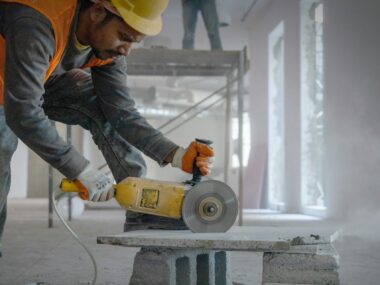
The first and most critical step is preparing the surface of the existing structure. The concrete or steel substrate must be clean, dry, and free of any loose material.
Any cracks or voids are repaired, and the surface is often ground or sandblasted to create a smooth profile that ensures a strong bond with the epoxy.
Applying the Epoxy Primer and Resin
Once the surface is prepared, a primer is applied to seal the substrate and enhance adhesion.
Following the primer, a layer of epoxy resin, often called a saturant, is applied. This resin will impregnate the carbon fiber fabric and bond it to the structure.
Placing and Curing the Carbon Fiber
The carbon fiber fabric is then carefully placed onto the wet resin. Rollers are used to press the fabric into the resin, ensuring full saturation and removing any air bubbles.
Depending on the design, multiple layers of fabric and resin may be applied. The epoxy is then allowed to cure, a process that can be accelerated with heat if necessary.
Once cured, the CFRP becomes an integral part of the structure, providing the intended reinforcement.
Limitations and Considerations
While carbon fiber offers numerous benefits, there are also some limitations to consider during the planning and design phase.
High Initial Material Cost
The material cost of carbon fiber is generally higher than that of traditional materials like steel.
However, this initial expense can often be offset by reduced labor costs, faster project completion times, and lower long-term maintenance needs. A thorough life-cycle cost analysis is essential to fully appreciate the economic benefits.
Susceptibility to Fire and UV Exposure
The epoxy resins used in CFRP systems can be sensitive to high temperatures. In case of a fire, the resin can soften, compromising the bond and the effectiveness of the reinforcement. For this reason, fire-protective coatings are often required.
Similarly, prolonged exposure to UV radiation can degrade the epoxy, so protective topcoats are necessary for exterior applications.
A Stronger Foundation for Our Assets
Carbon fiber reinforcement represents a significant advancement in structural engineering and construction.
Its unique combination of high strength, low weight, and excellent durability provides a powerful tool for extending the lifespan of our aging infrastructure.
While material costs and specific vulnerabilities require careful consideration, the long-term benefits of reduced maintenance, faster installation, and superior performance often make it the most effective solution.
As we continue to face the challenge of maintaining and upgrading our built environment, carbon fiber stands out as a key material for creating a more resilient and sustainable future.


 Ian Soto