Ian Soto
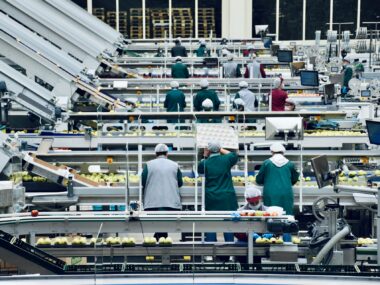
Medical device manufacturing has always demanded a level of precision that few other industries require. A single misaligned component or contaminated surface can compromise patient safety, trigger costly recalls, or delay a product’s path to market. As demand for complex devices grows and regulatory scrutiny tightens, manufacturers are turning to automated systems to meet these challenges without sacrificing speed or quality.
This shift isn’t just about replacing manual labor. It’s about building production lines that can consistently deliver accuracy at scale, adapt to smaller batch sizes, and maintain the sterile conditions that modern devices require. From diagnostic tools to implantable devices, the companies leading this transition are rethinking how products move from design to delivery.
This post explores how automated assembly is reshaping medical device manufacturing, the specific advantages it brings to pharmaceutical automation, and what manufacturers should consider when evaluating new production technology.
Why Is Precision So Critical in Medical Device Manufacturing?
Medical devices often contain dozens of small, intricate components that must be assembled within extremely tight tolerances. A pacemaker, an insulin pump, or a diagnostic cartridge leaves little room for error. Even minor deviations can affect device performance or, worse, patient outcomes.
The Cost of Inconsistency
Manual assembly, no matter how skilled the operator, introduces variability. Fatigue, human error, and inconsistent technique can all affect the quality of the final product. Some consequences include:
- Increased rates of product recalls
- Higher rework and scrap costs
- Extended time-to-market due to quality control delays
- Greater risk of regulatory non-compliance
How Automation Reduces Variability
Automated systems execute the same movements with the same force and placement, every single time. This consistency is particularly valuable for high-volume devices where even a 0.1% defect rate can translate into thousands of faulty units.
How Does Sterile Assembly Benefit from Automated Systems?
Sterility is non-negotiable in medical device production. Many devices, particularly those that are implantable or come into direct contact with bodily fluids, must be assembled in controlled environments that minimize contamination risk.
Reducing Human Contact Points
Every person who interacts with a product during assembly introduces a potential contamination risk. Automated sterile assembly systems limit this exposure by:
- Performing tasks within isolators or cleanroom-integrated equipment
- Minimizing the need for operators to handle components directly
- Maintaining consistent environmental controls throughout the process
Supporting Cleanroom Compatibility
Modern automated equipment is often designed specifically for cleanroom environments, with materials and components that resist particle generation and are easy to sanitize. This compatibility allows manufacturers to maintain compliance with standards like ISO 14644 while still achieving high throughput.
What Role Does Automation Play in Pharmaceutical Automation?
While medical devices and pharmaceuticals are distinct categories, the production challenges often overlap. Pharmaceutical automation shares many of the same priorities: contamination control, traceability, and consistency at scale.
Shared Technology, Shared Benefits
Many of the same automated platforms used in device assembly, such as robotic pick-and-place systems, vision inspection, and automated packaging lines, are directly applicable to pharmaceutical production. This overlap means manufacturers operating across both sectors can benefit from shared infrastructure and expertise.
Traceability Across the Production Line
Regulatory bodies increasingly require detailed documentation of every step in the manufacturing process. Automated systems can log data in real time, creating an audit trail that includes:
- Batch and lot numbers
- Timestamps for each assembly stage
- Inspection results and pass/fail data
- Equipment calibration records
This level of detail would be extremely labor-intensive to capture manually but is a natural byproduct of automated production.
What Should Manufacturers Look for in an Automation Partner?
Not all automation solutions are created equal, and choosing the wrong partner can lead to costly delays or systems that fail to meet regulatory requirements. Manufacturers should evaluate potential partners based on several factors.
Industry-Specific Experience
A provider with a track record in medical device manufacturing will understand the regulatory landscape, including FDA and ISO requirements, and can design systems that are validation-ready from the start.
Scalability and Flexibility
Devices evolve quickly, and production lines need to adapt. Look for systems that can be reconfigured for new product variants or scaled up as demand grows, rather than requiring a complete overhaul.
Integration Capabilities
Automated assembly equipment should integrate smoothly with existing quality management systems, ERP platforms, and other manufacturing execution systems to avoid data silos.
How Does Automated Assembly Improve Time-to-Market?
Speed matters in a competitive industry where being first to market can determine commercial success. Automated assembly accelerates several stages of production.
Faster Changeovers
Modern systems are designed for quick reconfiguration between product lines, reducing downtime when switching between device models or batch sizes.
Reduced Validation Cycles
Because automated systems perform tasks consistently, the validation process, which confirms that a process reliably produces a product meeting its specifications, can often move faster than with manual processes that require extensive operator training and variability testing.
Parallel Processing
Automation allows multiple assembly steps to occur simultaneously across different stations, rather than relying on a single operator to complete one task before starting the next.
What Does the Future Hold for Automated Medical Device Assembly?
The next generation of automated systems is moving beyond simple repetitive tasks toward more adaptive, intelligent production.
Smarter Quality Control
Machine vision systems are becoming more sophisticated, capable of detecting microscopic defects that would be invisible to the human eye. This capability is particularly valuable for complex devices with multiple small components.
Greater Customization at Scale
As personalized medicine grows, manufacturers need systems that can handle smaller batch sizes without sacrificing efficiency. Flexible automation platforms are increasingly designed to support this kind of mass customization.
Data-Driven Continuous Improvement
With more data flowing from connected equipment, manufacturers can identify bottlenecks and quality trends faster, enabling continuous process improvements rather than waiting for periodic audits to surface issues.
Building a More Resilient Production Line
Medical device manufacturers face a demanding combination of precision requirements, regulatory oversight, and competitive pressure. Automated assembly addresses each of these challenges directly, offering consistency that manual processes struggle to match, supporting the sterile conditions required for sensitive devices, and accelerating the path from design to delivery.
For manufacturers considering a shift toward automation, the decision isn’t simply about replacing manual labor with machines. It’s about building a production line that can adapt to changing product demands, maintain compliance across jurisdictions, and support long-term growth.
Working with an experienced partner in healthcare assembly automation can help manufacturers navigate this transition with confidence, ensuring new systems are designed around the specific demands of medical device production from day one. As the industry continues to evolve, those who invest in flexible, data-driven automation today will be better positioned to meet tomorrow’s manufacturing challenges.

 Ian Soto